Will AI replace product photography? An honest answer from a studio that uses it
Not the photo of your real product. What AI already does better than a shoot, what it still can't do, and who should still book a photographer.
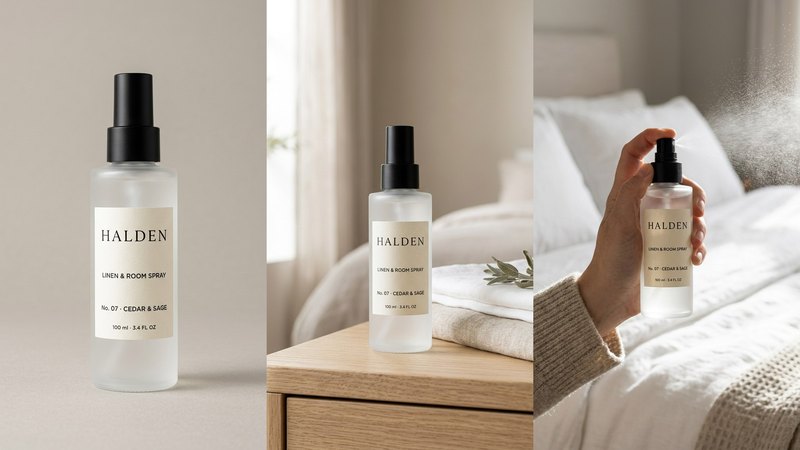
Will AI replace product photography? Not completely, and not the part that matters most. AI can't photograph your real product. Everything it makes starts from a photo of the real thing, and if that photo is wrong, every AI image built on it is wrong too.
What AI is replacing is most of the work after that first photo: the scenes, the seasons, the ad sizes and the variations that used to need a full shoot. We make AI product images for DTC brands, so we have an obvious interest here. Here is where we think the line really sits, and why.
The images above are from HALDEN, a concept brand we made for this article series (an invented linen and room spray, not a client). Treat the plain packshot on the left as the starting photo. The bedside scene and the spray over the bed were made with AI from it. Because HALDEN is a concept, that packshot was made with AI too; for a real brand, it would be a photo of the real bottle.
1. The short answer: real photo first, AI everywhere else
Product photography used to be one job: get the product in front of a camera, in every scene you need. Now it splits into two.
- The reference photo. One sharp, evenly lit, colour-true photo of the real product. A person and a camera still do this, even if the camera is a phone.
- Everything built from it. Lifestyle scenes, seasonal versions, ad sizes, backgrounds and short videos. This is where AI now does most of the work.
So AI won't replace the first photo. It replaces a lot of the shoots that came after it.
2. What AI already does better than a shoot
- Variety from one product. One packshot can become a kitchen counter, a bathroom shelf, a gift on a table at Christmas and a summer picnic, without shipping samples anywhere.
- Speed. Days instead of the weeks it takes to book a studio, a stylist and a model.
- Every size you need. Stories, feed, square and banner, each made at its own size instead of cropped from one. See every ad size, one product.
- A consistent look. Once the palette, light and props are written down, every image can share them. That's how a range starts to look like one brand: don't copy a prompt, build a world.
- Fresh ads. Ads wear out, and testing new angles every few weeks is where a monthly shoot falls behind.
3. What AI still can't do
- Capture your product. It needs a real photo to start from. Pure text-to-image gives you something that looks like your product but isn't, and buyers can tell.
- Guarantee small details. Fine print, ingredient lists, stitching and engraved logos can drift. Every image has to be checked against the real product. We test this in does ChatGPT change your product?.
- Prove fit and texture. How a dress hangs on a body, how a cream spreads, how heavy a ring feels. Where the buying decision rests on that, a real photo or video carries more trust.
- Be real people. Reviews, testimonials and real customer content should be real. AI "customers" are a fast way to lose trust.
- Get the colour right without a reference. If the source photo is off, every AI image inherits the error.
Our five AI mistakes we caught shows what goes wrong when nobody checks: three hands, a misspelt label, impossible physics.
4. Who should still book a photographer
- Fashion brands where fit sells. On-body fit, drape and movement still look best photographed.
- Jewellery at macro scale. Real stones and metal up close are hard to fake convincingly, and buyers zoom in.
- Brands whose story is the people. Makers, founders, a real workshop: that's documentary, not product photography.
- Products with regulated labels. Food, supplements and cosmetics where the label text must be exact. AI can make the scene, but the label should be the real one, placed on afterwards.
For everyone else, the honest answer is usually a mix: one good photo session for the reference shots, then AI for the volume.
5. What this means if you're a photographer
The work moves rather than disappears. The reference photo matters more than ever, because every AI image inherits its quality. And art direction becomes the job: deciding the light, the world and the story, then checking every output. Photographers who can direct AI and catch its mistakes are doing the same job with a new tool.
6. How we work, so you can judge for yourself
1. Start from one real photo of your product.
2. Write a short brief: the purpose, the composition, the light and the style (how to brief an AI image).
3. Make the scenes with AI.
4. Check every image against the real product: text, colour, shape and scale (the AI product image checklist).
5. Throw away anything that fails, and never fix a bad image by asking AI to edit it again.
Where we wouldn't use AI
- The main marketplace image. Show the real product. Use AI for the images after it.
- Customer reviews, before-and-after claims, or anything presented as real use.
- Labels a regulator or buyer will read closely.
Where a platform or market requires AI disclosure, apply it.
What it costs, roughly
A studio shoot for a set of scenes typically runs $2,000 or more and takes 2–3 weeks. Doing it yourself with ChatGPT or Gemini costs a subscription and your time. Our Pilot is $199 for 8 images and a 15-second vertical video in 5 days, made from the photo you already have. Here's the side-by-side comparison.
If you'd rather we did it, send one photo of your product and we'll send back a direction.
The free guides behind it.
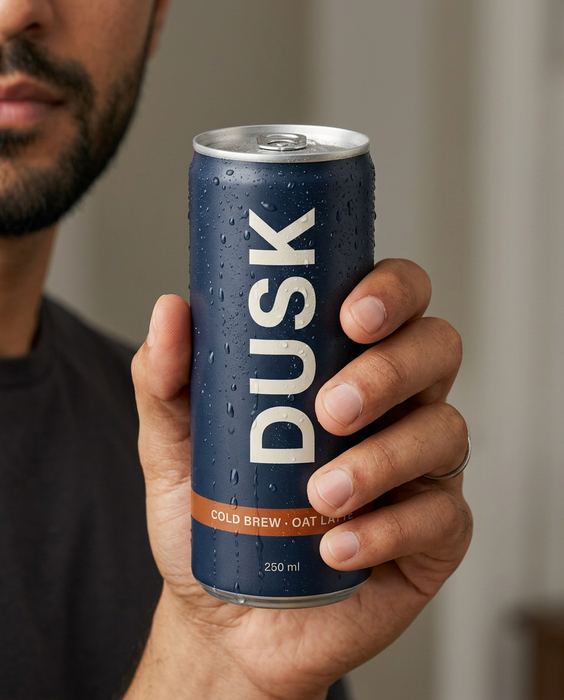 Step 01 · Start here
The AI product image checklist
Lock the product, go close, test the colour, build the world. The checks we run on every set.
[ Open the guide → ]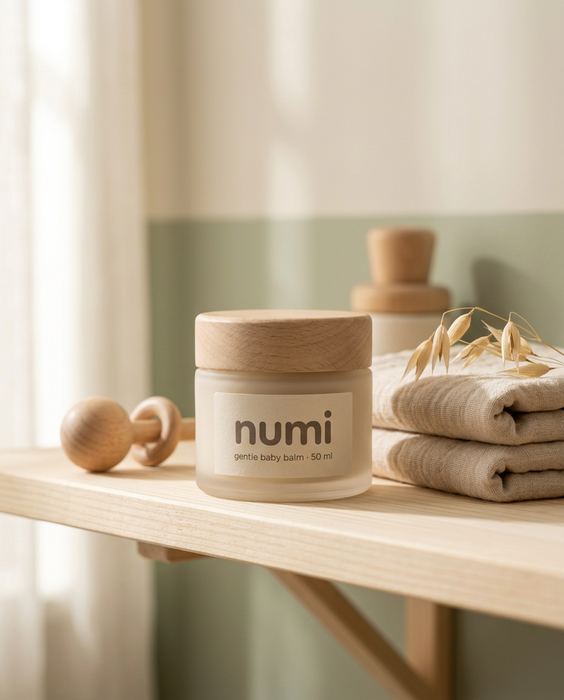 Step 05
Don't copy a prompt. Build a world.
Palette, light, place and props written once, then used in every shot, so the set reads as one brand.
[ Open the guide → ]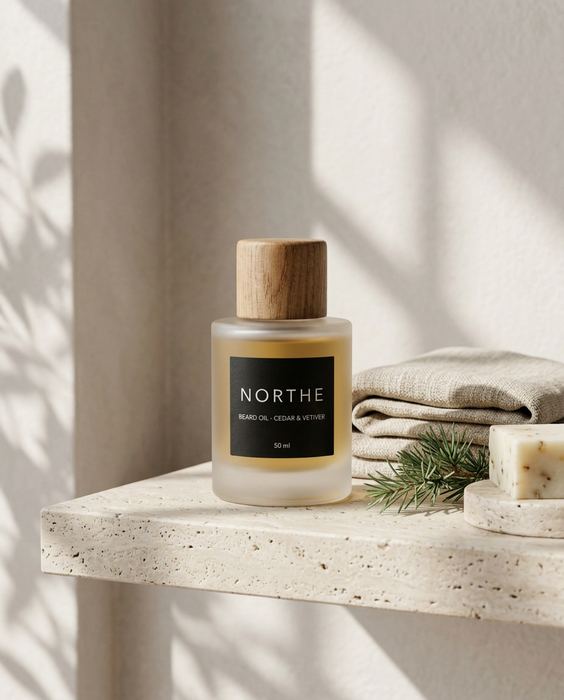 Step 15
5 AI mistakes we caught
Three hands, a misspelt label, impossible physics, the wrong build order and video drift, with the check for each.
[ Open the guide → ]