AI product photography for pet brands: the same dog, the same bottle, every ad
How we make AI images for pet brands: one honest packshot, one dog that stays the same dog, fur and foam that look real, and where pet brands should skip AI.
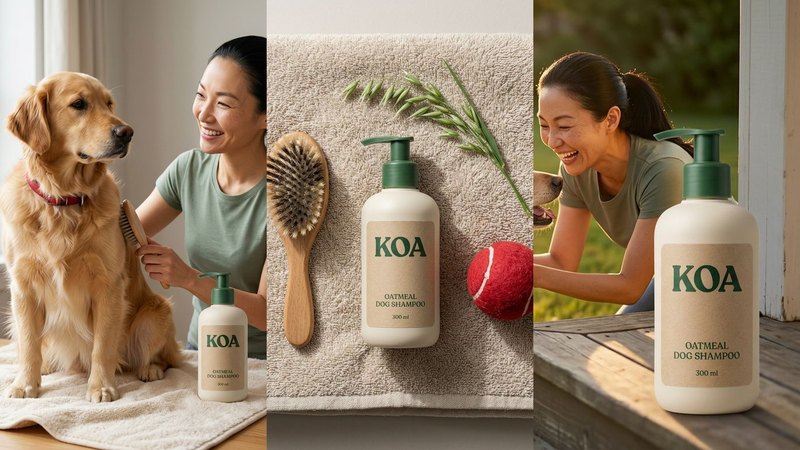
Pet brands need more images than almost anyone. A dog shampoo has to sell on the product page, in Stories, in the feed, in a banner and in an email, and the best-selling image is almost never the bottle on its own. It's the bottle with a dog, in a home, in a moment that owners recognise.
So AI product photography for pet brands is a growing search. The top results are mostly tool pages and "best AI tools" lists, plus a few good guides on collars, beds and food labels. What they mostly skip is the animal: how to keep one dog looking like the same dog across a whole campaign, and how to make fur, foam and a wet coat look like the real thing.
We make AI product images and video ads for DTC brands. To work out what holds up for pet care, we invented a grooming brand, KOA (an oatmeal dog shampoo in a cream bottle with a green pump and a kraft label), and built a set from one packshot. KOA is a concept brand, not a client. Here's what it taught us.
1. Start from one honest packshot
Every scene copies the bottle from somewhere, so that somewhere has to be right. For KOA the input was one plain front view: the bottle standing on a soft grey background, label square to the camera, even light. A sharp phone photo with true colour is enough.
Then check every image against it. Pet products drift in a few predictable places:
- the label text: the product name, the volume and any small print. AI likes to swap a letter or a number, so read every word,
- the pump or cap: its colour, its shape and which way the nozzle points,
If any of that changes, fix it or make the image again. An owner who buys the bottle in the picture should get the bottle in the picture.
2. Cast one dog, and keep it
This is where pet images give themselves away. Ask for "a golden retriever" five times and you get five golden retrievers: different face, different coat, a different collar each time. Across a campaign, people notice.
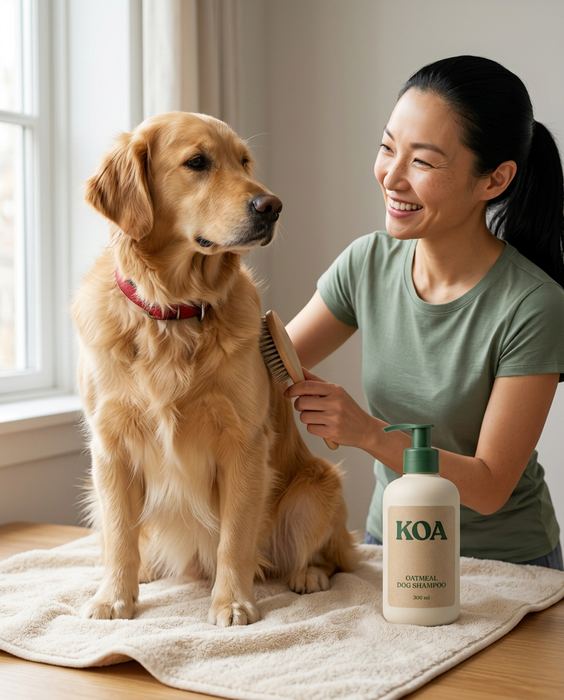
For KOA we cast the dog once and wrote it down like a character: a golden retriever, a soft medium-gold coat with lighter feathering on the chest and legs, a calm face, and a red collar that never changes. The collar does more work than you'd think. It's the quickest thing for the eye to check, and when it drifts, the whole dog feels like a stranger.
The same goes for the person. KOA's owner is the same woman in every image, in a plain t-shirt, with the same hair. How to build that kind of reference: Don't copy a prompt, build a world.
3. Make fur, foam and water obey physics
A dog is fur, and fur is where AI goes soft. Real fur has direction: it lies flat on the head, gets longer on the chest, ears and tail, and catches light at the edges. AI fur often turns into one smooth texture, like a plush toy.
In the KOA bath image the dog sits in a white tub with foam on its head, and the coat around the collar is wet and darker. What made it read as real was saying the details out loud:
- wet fur clumps and goes darker, dry fur stays fluffy and light,
- foam sits on top of the coat in uneven patches, it doesn't cover the dog like snow,
- the window light gives a soft rim along the fur, so the dog has an edge.
For a shampoo, that bath moment is the product working, so it's worth the extra rounds. A perfectly clean scene with a dog in it looks staged.
4. Build the set as a shot list, then size it for every ad
"Dog shampoo product photo" gives you the same bottle on the same towel, five times. We wrote a short list first, and each image has a job:
1. Grooming moment: the dog sitting on a towel by a window while its owner brushes it, bottle in the front corner. The feed post.
2. Bath time: the dog in the tub with foam on its head, the owner laughing and holding the bottle. Made tall, for Stories.
3. Flat lay: the bottle on a folded towel with a wooden brush, a sprig of oats and a red felt ball. The square for catalogue ads and the product grid.
4. Golden hour: the dog and its owner on a lawn in low sun, the bottle on the porch step, with open space on one side. The banner.
5. Packshot: the bottle alone, for the product page.
In the flat lay, the oats say "oatmeal" before anyone reads the label.
We made each size as its own image instead of cropping one, because a dog cropped out of a 4:5 into a 16:9 usually loses its ears or its tail. The sizes Meta, TikTok, Shopify and Amazon want, and what to keep clear in each, are in one product, every ad size, shown on this same KOA set. You can see all of KOA in our work.
5. Keep the moment candid, then add motion
Pet owners scroll past anything that looks like a catalogue. The KOA images that feel most real are the ones that look like a Sunday at home: a towel on the table, a brush mid-stroke, someone laughing. We describe the moment, not the pose. Our candid prompts go into how to do that with people in the frame.
Make the video from your best still, not from scratch, so the dog and the bottle stay the same. A tail wag, a slow push in, or foam settling is often enough for a 15-second ad. The method is in AI product video from one image.
Where we wouldn't use AI for pet brands
This is the part most AI tool pages leave out.
- Results on a real animal. If the image shows what the product does (a shinier coat, calmer skin, a cleaner dog), it must be your real product on a real dog. A generated before-and-after is a claim you can't back up.
- Health and safety claims. Anything about skin conditions, ingredients a vet would care about, or what a food does for a pet: use real photos of the real pack, and check what your market allows on labels and in ads.
- Fit and size. Collars, harnesses, beds and crates: show the real product on a real animal of a stated size. A generated dog always fits perfectly, and that's the problem.
- Your customers' pets. Reviews and "our community" posts should show real owners' real animals, never generated ones.
Where a platform or market requires AI disclosure, apply it. Labelled, honest, good-looking images still sell.
What it costs, roughly
A studio shoot for a set like this typically runs $2,000 or more and takes 2–3 weeks. Doing it yourself with ChatGPT or Gemini costs a subscription and your time, and you check every collar and every label yourself. Our Pilot is $199 for 8 images and a 15-second vertical video in 5 days, made from the photo you already have. Here's the side-by-side comparison.
Do it yourself, free
Everything above is written out step by step, with the exact prompts, in our free library (no email, no sign-up). Start with the AI product image checklist: lock the product, go close, test the colour, build the world.
If you'd rather we did it, send one photo of your product and we'll send back a direction.
The free guides behind it.
 Step 11
Every ad size, one product
Stories, feed, square, banner and product page: the sizes, and what to keep clear in each.
[ Open the guide → ]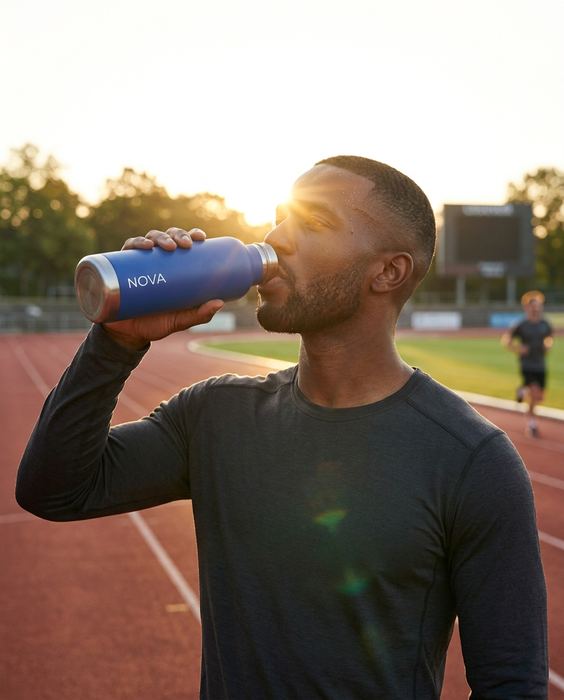 Step 07
4 candid prompts that look real
The track, the gym, the commute, the desk. How to make on-model shots read as real life.
[ Open the guide → ]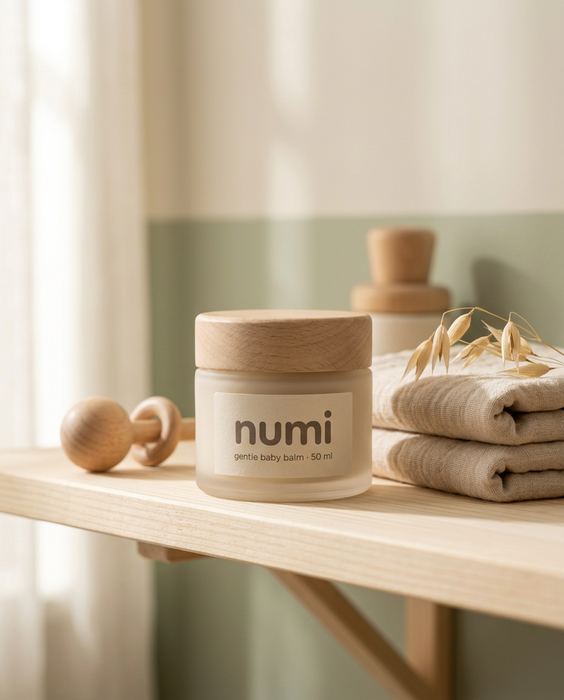 Step 05
Don't copy a prompt. Build a world.
Palette, light, place and props written once, then used in every shot, so the set reads as one brand.
[ Open the guide → ]