AI product photography for supplement brands: every flavour on brand, nothing the label can't back
How we make AI images for supplement brands: an exact label, every flavour in one look, a clean listing image, and the pictures supplements should never fake.
Supplement brands live on the product page. A jar of gummies or a tub of powder has to sell on Shopify, on Amazon, in a Meta ad and in Stories, and most brands sell more than one flavour or formula. That means a lot of images, and they all have to look like one brand.
So AI product photography for supplement brands is a growing search. The top results are mostly AI tool guides with scene ideas: ingredients in the background, a hand for scale, bottles lined up on a coloured backdrop. That's fine as far as it goes. What they mostly skip is the part that matters most for supplements: the label is a legal document, and an image can make a promise the label can't.
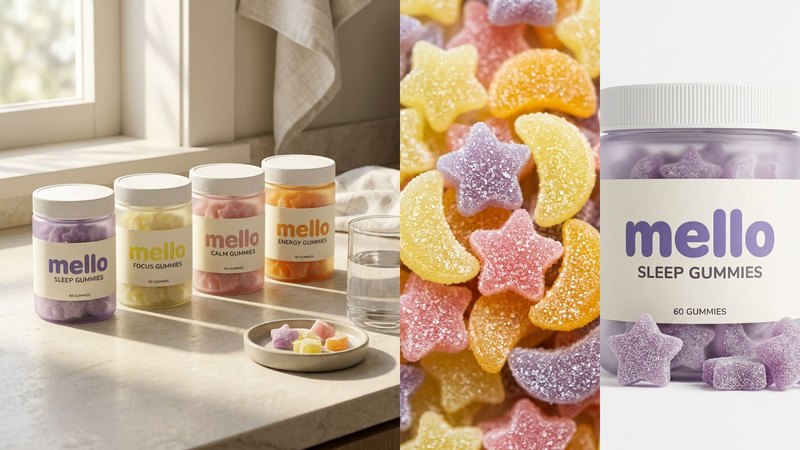
We make AI product images and video ads for DTC brands. To learn what holds up for supplements, we invented MELLO, a vitamin gummy in a frosted jar with a white lid, a cream label and star and moon gummies inside, in four flavours: Sleep, Focus, Calm and Energy. MELLO is a concept brand, not a client. Here's what it taught us.
1. Start from one honest packshot
Every scene copies the jar from somewhere, so that somewhere has to be right. For MELLO the input was one plain front view of the Sleep jar: lilac gummies behind a frosted jar, label square to the camera, on a warm light grey background. A sharp phone photo with true colour is enough.
Then check every image against it. Supplement packs drift in a few predictable places, and some of them matter more than they look:
- the product name and formula line: "Sleep Gummies" must not become "Sleep Gummy" or "Slep". Read every word,
- the count: "60 gummies" is a number a buyer relies on. AI turns 60 into 80 or 6 without a second thought,
- the gummies themselves: MELLO's are stars and moons. If the jar suddenly holds bears, it's a different product,
- the lid: colour, finish and whether it's on, off or beside the jar.
If any of that changes, fix it or make the image again. A buyer who orders the jar in the picture should get the jar in the picture.
2. Every flavour, one look
A supplement range sells as a family. Four jars that look like they came from four different brands make the whole range feel cheap.
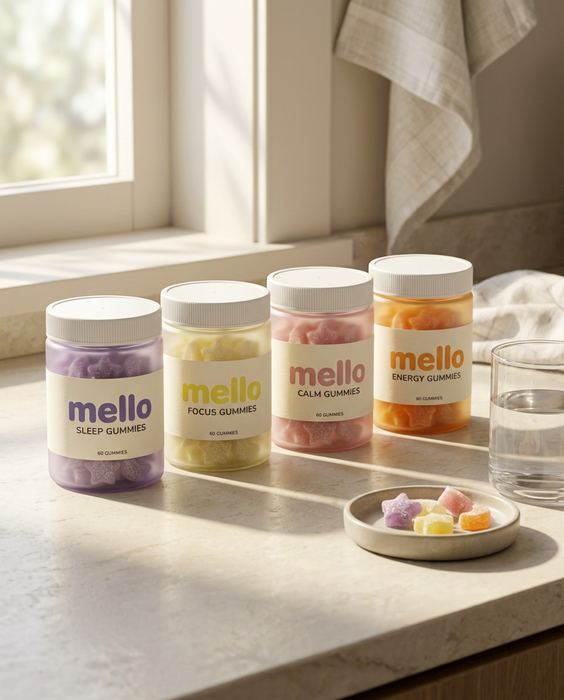
For MELLO we wrote a short guide before the first prompt: one colour per flavour (lilac for Sleep, yellow for Focus, pink for Calm, orange for Energy), cream labels, ink text, the same seamless warm grey backdrop, soft even light from the front, and the label facing the camera every time. Then each variant was made from the Sleep packshot by changing one thing: the colour and the name on the label. Everything else stayed identical.
That's why the four MELLO jars line up. Ask for "a jar of focus gummies" from scratch and you get a new jar, a new lid and a new font. Change one thing at a time and the range stays a range. The palette, the guide and the variant prompt are in From one photo to a brand kit.
3. The listing image, done right
Marketplaces and product pages want a clean image on white. For MELLO that was the Sleep jar on pure white, front-facing, with a few gummies in front of it, even soft light, a faint contact shadow and the jar filling about 60 percent of the frame.
Two rules kept it usable:
- No text in the prompt. Feature callouts ("vegan", "sugar-free", "60 gummies") go on afterwards in Canva or Figma. AI misspells small text, and on a supplement a misspelled word can be a wrong claim.
- The gummies in front must be the real gummies. Same shape, same colour, same sugar coating as what's in the jar.
Then the launch banner: all four jars in a row on a sunny pale stone kitchen counter, labels to the camera, morning light from the left, a glass of water and a small dish of gummies. Put the offer on it and it's the banner for the launch, the email and the homepage, in the same light as every other image. You can see the full MELLO set in our work.
4. Texture sells, but only the real texture
The MELLO macro is a close-up of sugar-coated stars and moons in all four colours. Close-ups like that sell the taste and the treat.
They also carry a risk. If the macro shows gummies that are glossier, bigger or a different shape from the ones in the jar, the image is selling a product you don't make. We checked the macro against the packshot like any other image: the same star and moon shapes, the same sugar coating, the same four colours.
5. Keep the people honest too
Most supplement ads put a person in the frame: someone taking a gummy, a gym bag, a bedside table. That's where AI makes it easy to cross a line without noticing. A person sleeping peacefully beside a sleep gummy, a glowing face beside a skin supplement, a defined body beside a protein tub: each of those is a picture of a result.
There's no person in the MELLO set, on purpose. Our rule is simple: show the moment, not the outcome. A jar on a kitchen counter in the morning is a routine. A person transformed is a claim. If a person is in the frame, write them once as a character sheet and keep the same person across the set, then check hands and faces at full size. The checks we run are in five AI product photo mistakes.
Where we wouldn't use AI for supplement brands
This is the part most AI tool pages leave out, and for supplements it matters more than anywhere else.
- The Supplement Facts panel and the back label. Never let AI draw them. Use your printed label or the real jar, photographed as it is.
- Results and before-and-after images. Weight loss, better sleep, clearer skin, more energy: any picture of an outcome is a claim, and a generated one can't be backed up.
- Ingredients that aren't in the formula. A heap of blueberries or a field of ashwagandha behind the jar says the product contains them. Only show what's on the label.
- Certification seals and badges. Third-party tested, organic, vegan: use the real marks, placed by your designer, only if you hold them.
- Your customers' reviews. Reviews and "our community" posts should show real people with your real product, never generated ones.
Supplement claims are regulated in most markets. Check what yours allows on labels and in ads, and where a platform requires AI disclosure, apply it. Labelled, honest, good-looking images still sell.
What it costs, roughly
A studio shoot for a supplement range like this typically runs $2,000 or more and takes 2–3 weeks, with every flavour posted to the studio. Doing it yourself with ChatGPT or Gemini costs a subscription and your time, and you check every label and every count yourself. Our Pilot is $199 for 8 images and a 15-second vertical video in 5 days, made from the photo you already have. Launch covers up to 3 products, which fits a small range. Here's the side-by-side comparison.
Do it yourself, free
Everything above is written out step by step, with the exact prompts, in our free library (no email, no sign-up). Start with the AI product image checklist: lock the product, go close, test the colour, build the world.
If you'd rather we did it, send one photo of your product and we'll send back a direction.
The free guides behind it.
 Step 10
One photo, a whole brand kit
The guide, every variant in one look, the listing image and the launch banner, from one packshot.
[ Open the guide → ]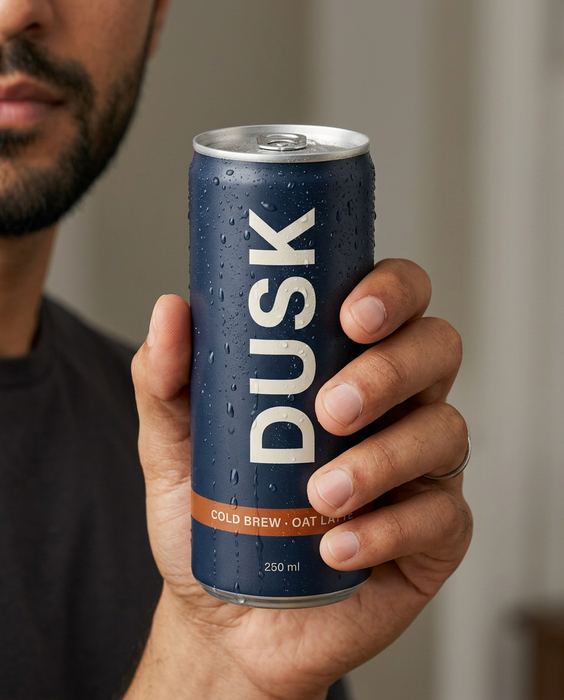 Step 01 · Start here
The AI product image checklist
Lock the product, go close, test the colour, build the world. The checks we run on every set.
[ Open the guide → ]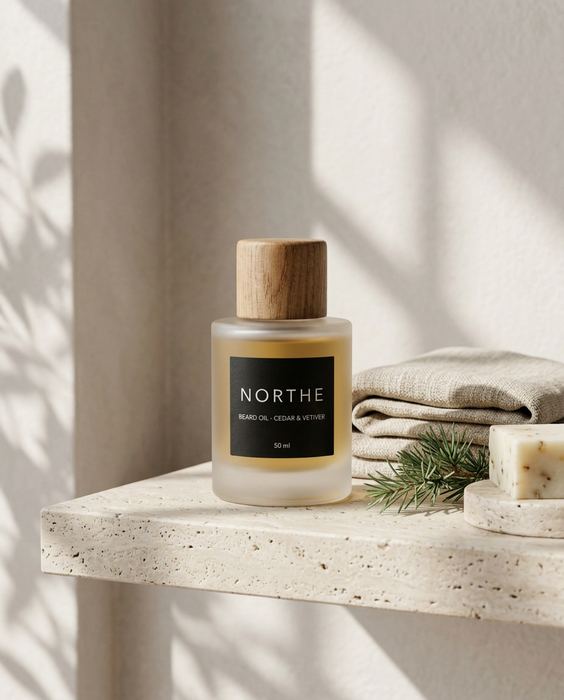 Step 15
5 AI mistakes we caught
Three hands, a misspelt label, impossible physics, the wrong build order and video drift, with the check for each.
[ Open the guide → ]